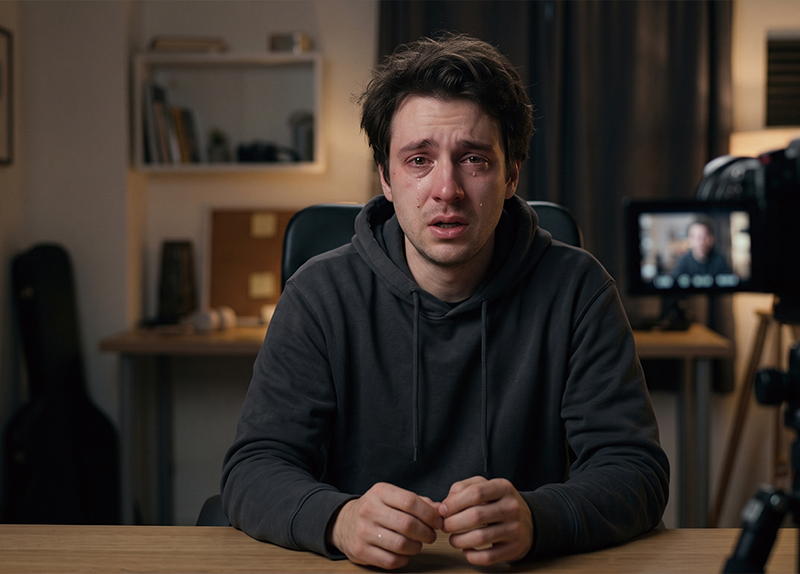
As more YouTubers respond to controversies with apology videos, a new online media genre has emerged. Some believe these videos can express genuine remorse and rebuild trust. Critics argue they are often scripted PR efforts designed to protect reputations rather than accept real responsibility.
Constructive
Pro Peter
I believe apology videos are important tools for people to correct their mistakes. When one makes a mistake, speaking directly to their audience is the best way to own up to it and ask for forgiveness. Recently, a Japanese influencer posted an apology video after his previous video led to an unrelated man being misidentified and fired from his job, helping the man get his job back. This is a great example of how apology videos can lead to a positive outcome. Through apology videos, creators can show their human side and build a closer connection with viewers. It is a direct, honest way to say sorry and start fixing the damage. Therefore, I argue that apology videos are effective and a great way to correct one뭩 mistake.
Con Bella
While saying sorry matters, apology videos nowadays have just become PR theater. People often rely on tricks like letting out a heavy sigh, crying with their makeup on, or looking away from the lens to generate sympathy. As writer Taylor Lorenz said, 밒f you뭨e sincere about an apology, you don뭪 do it on YouTube.� I am not saying that every apology video on YouTube is insincere and fake. However, if a person is serious about correcting their mistake, they should put themselves in a position where their action can be scrutinized. Without that, apology videos can come across as disingenuous because they are used to seek forgiveness without facing the real consequences of their mistakes. Therefore, apology videos are not an effective way to correct one뭩 mistakes.
Rebuttal
Pro Peter
Bella claims that apology videos are mere theater, but she overlooks their effectiveness in making amends. Yes, some people might misuse the format, but that does not make the medium itself ineffective. For instance, when the aforementioned Japanese influencer뭩 prank went wrong, his public confession and subsequent video to the employer were the reason an innocent worker regained his livelihood. In a digital world where misinformation spreads instantly, a video is the most direct, visible, and personal way to set the record straight. It allows creators to take accountability before an audience that had witnessed their mistake. We should not dismiss genuine efforts to repair harm simply because a few bad actors put on a shallow performance in their apology videos.
Con Bella
Peter points to a rare positive example to defend a medium that is often ineffective. The reality is that many apology videos are carefully planned attempts at damage control rather than genuine expressions of remorse. For example, when creators cry on camera, they may be trying to exploit their audience뭩 empathy to avoid being canceled. Real accountability means accepting scrutiny of one뭩 actions and facing consequences, not posting a carefully edited video. There are many better ways to apologize, such as issuing a public statement or apologizing directly to those affected. Someone who is truly sorry should focus on consistent actions that rebuild trust, rather than producing content that generates attention and views. That is why apology videos should not be taken too seriously.
Judge뭩 Comments
Both sides present strong cases. Peter demonstrates that apology videos can be powerful tools for accountability, while Bella highlights the risk of them being calculated PR drama. Ultimately, viewers must decide for themselves whether a creator뭩 apology is genuine or just performative."
Hwibok Lee For The Teen Times teen/1785740107/1613367727
1. Why do experts argue nations must accept refugees?
2. What does Migration Watch warn regarding mass immigration?
3. How does weather prevent communities from waiting patiently?
4. Why might resettlement trigger a severe population drain?
1. Do industrialized countries owe a debt to refugees?
2. Should international law formally protect refugee status?
3. Is funding local adaptation sufficient without accepting refugees?
4. Can developed nations absorb refugees without internal crises?








































































 What뭩 This About?




